Medically reviewed by Dr. Leslie Kernisan, MD, MPH — Board-Certified Geriatrician · last reviewed March 2, 2026
Fall Prevention for Seniors: A Proactive Guide to Safety, Confidence & Companion Care
Discover actionable fall prevention tips for seniors, including home safety modifications, mobility exercises, and how companion care reduces fall-related anxiety. Learn how the Safe & Steady Fall Prevention Program keeps seniors safe, active, and emotiona

Why Fall Prevention for Seniors Is a Top Priority
Falls are the leading cause of injury—and injury-related deaths—among adults aged 65 and older. According to the Centers for Disease Control and Prevention (CDC), one in four seniors falls each year, and less than half tell their doctor. Even more alarming? Falling once doubles the chances of falling again.
But here’s the good news: falls are preventable. With the right strategies—home modifications, mobility exercises, assistive devices, and companion care—seniors can maintain their independence, confidence, and quality of life. This guide explores proactive fall prevention, combining practical safety tips with emotional support strategies to keep seniors safe and socially engaged.
The Hidden Dangers: Why Seniors Are at Higher Risk of Falls
Falls don’t just happen—they’re often the result of multiple risk factors that accumulate over time. Understanding these risks is the first step in prevention.
Common Physical & Medical Fall Risks
- Muscle weakness & balance issues – Age-related sarcopenia (muscle loss) and conditions like arthritis or neuropathy increase instability.
- Vision problems – Cataracts, glaucoma, and macular degeneration reduce depth perception and obstacle awareness.
- Medication side effects – Blood pressure drugs, sedatives, and antidepressants can cause dizziness or drowsiness.
- Chronic conditions – Diabetes (nerve damage), Parkinson’s (tremors), and Alzheimer’s/dementia (confusion) heighten fall risks.
- Foot problems – Bunions, corns, or improper footwear (e.g., slippery soles) affect stability.
Environmental Hazards in the Home
The home—where seniors spend most of their time—is a common fall zone. The CDC reports that 60% of falls happen at home, often due to:
- Poor lighting (especially in hallways, staircases, and bathrooms).
- Cluttered floors (rugs, cords, pet toys).
- Lack of grab bars in bathrooms and showers.
- Uneven surfaces (thresholds, loose floorboards).
- Inaccessible storage (items placed too high or low).
The Emotional & Social Impact of Falls
Falls don’t just cause physical injuries—they can erode confidence, trigger anxiety, and lead to social isolation. After a fall, many seniors develop a fear of falling again, which:
- Reduces mobility (leading to muscle atrophy and further instability).
- Increases dependence on others (lowering self-esteem).
- Causes withdrawal from social activities (accelerating cognitive decline).
A 2022 study in Gerontology found that seniors with fall-related anxiety were 3x more likely to experience depression. This is where companion care plays a crucial role—not just in physical safety, but in emotional reassurance.
Proactive Fall Prevention: A Multi-Layered Approach
Preventing falls requires a holistic strategy that addresses physical, environmental, and emotional factors. Below, we break down actionable steps for seniors and caregivers.
1. Home Safety Modifications: Reduce Hazards Before They Cause Falls
A few simple changes can dramatically lower fall risks. Use this checklist to assess a senior’s home:
🏠 Room-by-Room Fall Prevention Checklist
- Entryways & Hallways
- Install motion-sensor lights or nightlights.
- Remove throw rugs or secure them with non-slip pads.
- Keep pathways clear of clutter (shoes, bags, pet bowls).
- Add handrails on both sides of staircases.
- Bathroom (the #1 fall hotspot)
- Install grab bars near the toilet and shower.
- Use a shower chair and non-slip bath mat.
- Replace glass shower doors with curtains (easier to grab in an emergency).
- Set water heater to 120°F or lower to prevent burns.
- Kitchen
- Store frequently used items on lower shelves (avoid step stools).
- Use non-slip mats near the sink and stove.
- Clean spills immediately to prevent slips.
- Bedroom
- Place a phone and flashlight within reach of the bed.
- Ensure the bed is at a comfortable height (knees level when sitting).
- Use bedside rails if needed for support.
- Outdoors
- Repair cracked sidewalks and uneven pathways.
- Install handrails on porches and steps.
- Keep walkways clear of ice, leaves, and debris.
- Ensure outdoor lighting is bright and motion-activated.
2. Mobility & Strength Exercises: Build Confidence & Stability
Weak muscles and poor balance are major fall risk factors. The National Institute on Aging (NIA) recommends seniors incorporate these low-impact exercises into their routine:
💪 5 Best Exercises for Fall Prevention
- Heel-to-Toe Walk – Improves balance (walk in a straight line, heel touching toe).
- Sit-to-Stand – Strengthens legs (stand up from a chair without using hands, repeat 10x).
- Side Leg Raises – Enhances hip stability (hold onto a chair, lift leg sideways, 10 reps per side).
- Tai Chi – Boosts coordination and flexibility (gentle, flowing movements).
- Ankle Circles – Prevents stiffness (rotate ankles clockwise/counterclockwise, 10 reps each).
Pro Tip: A physical therapist or senior fitness specialist can create a personalized exercise plan based on mobility levels.
3. Assistive Devices: Tools to Enhance Safety
From canes to smart home tech, assistive devices can be game-changers for fall prevention. Consider these options:
🛠️ Essential Assistive Devices for Seniors
- Mobility Aids
- Canes (single-point or quad-based for extra stability).
- Walkers (standard or rollators with seats).
- Wheelchairs or scooters (for longer distances).
- Bathroom Safety
- Raised toilet seats.
- Shower benches with backrests.
- Long-handled sponges for bathing.
- Smart Home Tech
- Medical alert systems (e.g., Life Alert, Philips Lifeline).
- Smart lights (e.g., Philips Hue with motion sensors).
- Fall detection wearables (e.g., Apple Watch, GreatCall Lively Mobile).
- Footwear
- Non-slip soles (avoid smooth-bottomed shoes).
- Low heels with good arch support.
- Velcro or elastic laces for easy on/off.
4. Medication Management: Reduce Dizziness & Drowsiness
Some medications increase fall risks by causing dizziness, low blood pressure, or confusion. Seniors should:
- Review medications annually with a doctor or pharmacist.
- Avoid mixing alcohol with prescription drugs.
- Take medications at the same time daily to maintain consistency.
- Use a pill organizer to prevent missed or double doses.
Red Flag Medications: Benzodiazepines (e.g., Xanax), antidepressants (e.g., SSRIs), antihypertensives, and sleep aids.
5. Vision & Hearing Checks: Stay Aware of Surroundings
Poor vision and hearing double fall risks. Seniors should:
- Get an annual eye exam (check for cataracts, glaucoma, or macular degeneration).
- Update prescription glasses as needed.
- Use bright, even lighting (avoid glare).
- Get a hearing test if struggling to hear conversations or alarms.
The Role of Companion Care in Fall Prevention
While home modifications and exercises are critical, companionship plays an often-overlooked role in fall prevention. Here’s how in-home companion care helps:
1. Reducing Fall-Related Anxiety
After a fall, many seniors develop a fear of falling again, leading to self-imposed activity restrictions. A companion provides:
- Emotional reassurance – Knowing someone is nearby reduces anxiety.
- Encouragement to stay active – Companions can accompany seniors on walks or to exercise classes.
- Distraction from fear – Engaging in conversation or hobbies shifts focus away from fall-related worries.
2. Preventing Social Isolation (A Hidden Fall Risk)
Social isolation increases fall risks by 20% (per a 2021 JAMA study). Lonely seniors are more likely to:
- Skip meals (leading to weakness).
- Neglect medication schedules.
- Stay sedentary (accelerating muscle loss).
A companion combats isolation by:
- Providing regular social interaction (reducing depression and cognitive decline).
- Encouraging outings and hobbies (maintaining mobility and confidence).
- Assisting with transportation to appointments (ensuring medical needs are met).
3. Personalized Mobility Assistance
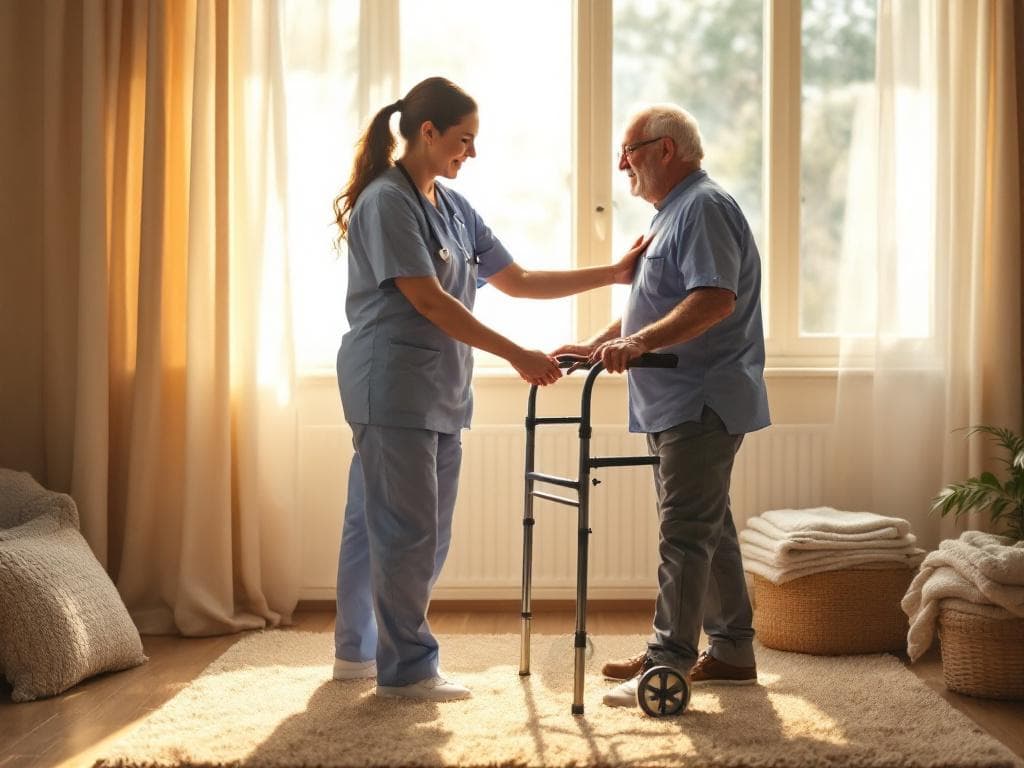
Companions trained in fall prevention techniques can:
- Help with safe transfers (e.g., from bed to wheelchair).
- Assist with balance during walking (using gait belts if needed).
- Encourage hydration and nutrition (preventing dizziness from dehydration).
- Monitor for signs of fatigue or confusion (common before falls).
4. Emergency Response & Peace of Mind
Even with precautions, falls can happen. A companion ensures:
- Immediate assistance (helping the senior get up safely or calling for help).
- Faster medical response (reducing complications from prolonged immobility).
- Family notifications (keeping loved ones informed).
Safe & Steady Fall Prevention Program: A Holistic Solution
At Senior Care Companion, our Safe & Steady Fall Prevention Program takes a proactive, personalized approach to keeping seniors safe. Here’s how it works:
1. Comprehensive Home Safety Assessment
Our trained caregivers conduct a room-by-room evaluation to identify and address hazards, including:
- Lighting and electrical safety.
- Flooring and rug stability.
- Bathroom and kitchen accessibility.
- Furniture arrangement for easy navigation.
2. Personalized Mobility & Exercise Plan
We collaborate with physical therapists to create a custom exercise routine tailored to the senior’s abilities, focusing on:
- Strength and balance training.
- Flexibility and coordination exercises.
- Safe walking techniques.
3. Medication & Health Monitoring
Our caregivers help seniors:
- Manage prescriptions (ensuring timely doses).
- Track blood pressure and blood sugar (if applicable).
- Schedule and attend medical appointments.
4. Emotional Support & Social Engagement
We prioritize mental well-being by:
- Providing companionship and conversation.
- Encouraging hobbies and outings (e.g., museum visits, gardening).
- Reducing loneliness and depression through regular interaction.
5. 24/7 Emergency Response
With our medical alert system integration, seniors have immediate access to help in case of a fall, even when a caregiver isn’t present.
Real-Life Success Stories: How Companion Care Prevents Falls
Don’t just take our word for it—here’s how our Safe & Steady Program has helped seniors in Sunnyvale and beyond:
📖 Case Study 1: Regaining Confidence After a Fall
Client: Margaret, 82, Sunnyvale | Condition: Osteoporosis, balance issues
Challenge: After a fall in her bathroom, Margaret developed a severe fear of falling again. She stopped leaving her home, leading to muscle weakness and social isolation.
Solution: Our caregiver, Sarah, implemented a multi-step plan:
- Installed grab bars and a shower chair in Margaret’s bathroom.
- Accompanied her on daily walks to rebuild strength.
- Encouraged Tai Chi classes at a local senior center.
- Provided emotional support through regular visits and phone calls.
Result: Within 3 months, Margaret’s confidence returned. She now walks independently, attends social events, and hasn’t had a fall in over a year.
📖 Case Study 2: Preventing Falls in a Senior with Dementia
Client: Robert, 78, Cupertino | Condition: Early-stage Alzheimer’s
Challenge: Robert’s confusion led to wandering at night, increasing his fall risk. His family was exhausted from constant supervision.
Solution: Our Alzheimer’s and dementia care specialists:
- Installed motion-sensor lights and door alarms to alert caregivers of nighttime wandering.
- Created a structured daily routine to reduce anxiety and disorientation.
- Provided 24/7 companion care to ensure safety during high-risk times.
- Trained family members on de-escalation techniques for sundowning episodes.
Result: Robert’s nighttime wandering decreased by 80%, and his family regained peace of mind knowing he was safe.
Fall Prevention for Seniors: Next Steps for Families
Preventing falls is a team effort—involving seniors, caregivers, healthcare providers, and community resources. Here’s how to get started:
1. Conduct a Home Safety Audit
Use our free Home Safety Checklist (download below) to identify hazards in your loved one’s home.
2. Schedule a Fall Risk Assessment
Ask your loved one’s doctor for a fall risk evaluation, which may include:
- A Timed Up & Go (TUG) test (measures mobility).
- A medication review (to check for fall-risk drugs).
- A vision and hearing test.
3. Explore Companion Care Options
If your loved one lives alone or struggles with mobility, in-home companion care can provide:
- Daily safety checks.
- Assistance with exercises and errands.
- Emotional support to reduce fall-related anxiety.
Pro Tip: Look for agencies with caregivers trained in fall prevention (like our Safe & Steady Program).
4. Encourage Regular Physical Activity
Help your loved one find senior-friendly exercise classes, such as:
- SilverSneakers (offered at many gyms).
- Tai Chi or yoga for seniors.
- Water aerobics (gentle on joints).
5. Stay Connected & Monitor for Changes
Falls often happen when seniors hide their struggles. Regular check-ins can help you spot:
- Unexplained bruises or injuries.
- Reluctance to walk or stand.
- Changes in mood or energy levels.
Download Our Free Fall Prevention Resource Guide
Ready to take action? Our comprehensive Fall Prevention Resource Guide includes:
- A printable home safety checklist.
- Step-by-step balance exercises for seniors.
- A medication review worksheet.
- Tips for choosing the right assistive devices.
- Information on local Sunnyvale senior resources.
Final Thoughts: Falls Are Preventable—Let’s Take Action
Falls don’t have to be an inevitable part of aging. With the right home modifications, exercises, assistive devices, and companion care, seniors can stay safe, active, and independent for years to come.
At Senior Care Companion, we believe in a proactive, holistic approach to fall prevention—one that addresses physical safety, emotional well-being, and social connection. Our Safe & Steady Fall Prevention Program is designed to give seniors and their families peace of mind.
Ready to learn more? Contact us today for a free consultation and home safety assessment. Let’s work together to keep your loved one safe, steady, and thriving.
Because every step should be a confident one.